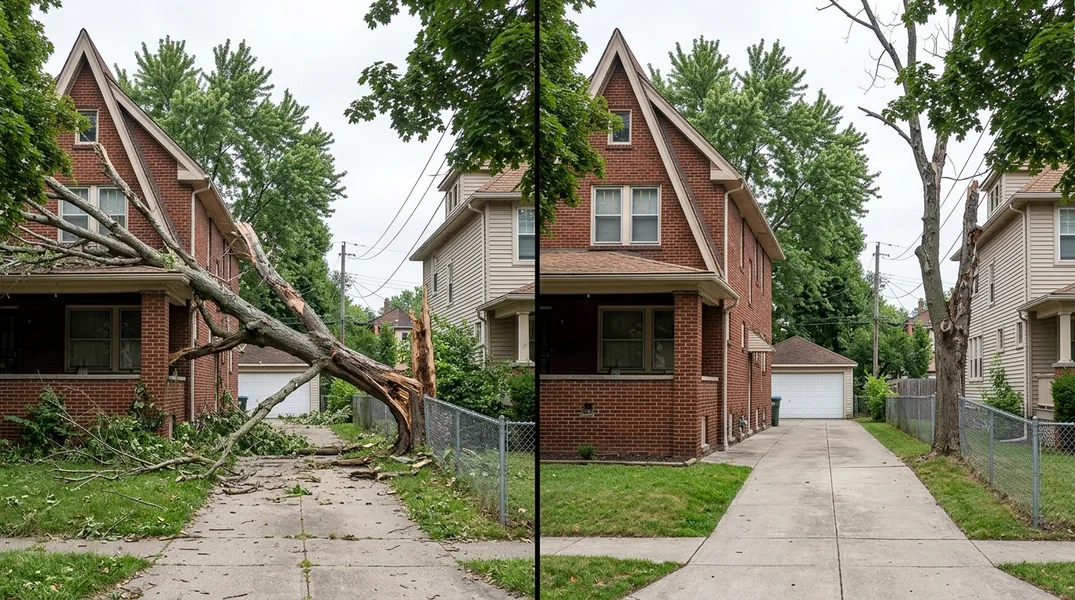
Understanding Beech Leaf Disease in Northeast Ohio
If you've noticed beech trees looking unusually stressed in your Cleveland neighborhood, you may be witnessing the effects of beech leaf disease (BLD), a serious threat to American beech populations across Northeast Ohio. This relatively new disease has been spreading rapidly since its discovery in the region, and homeowners need to understand what it is and how it affects their trees.
Beech leaf disease is caused by a nematode, a microscopic worm that infects beech trees and disrupts their vascular system. The disease was first documented in Ohio in 2012 and has since become a significant concern for arborists and property owners throughout the state. Unlike many tree diseases that develop slowly, beech leaf disease can progress quickly, potentially killing a mature beech tree within just a few years of infection. Understanding this disease is the first step toward protecting your property and making informed decisions about tree management.
Identifying Symptoms of a Dying Beech Tree
Recognizing the early signs of beech leaf disease is critical for taking action before the tree becomes too compromised. The most distinctive symptom appears on the leaves, typically in mid to late summer. Affected beech leaves develop dark, parallel lines or stripes between the leaf veins, creating a skeletonized appearance. These lines start at the base of the leaf and progress toward the tip, and the tissue between the veins may turn brown or black. If you're examining beech trees in Cleveland Heights or other parts of Northeast Ohio, look carefully at the leaf undersides, where these symptoms are often most visible.
Beyond leaf symptoms, a dying beech tree will show other warning signs that indicate the disease has progressed. Infected trees often experience premature leaf drop, sometimes losing their foliage weeks earlier than healthy beeches in the area. The canopy may thin noticeably, and branch dieback becomes apparent as twigs and smaller limbs fail to leaf out in spring. In advanced stages, the tree may produce fewer leaves overall, and the remaining foliage may appear pale or yellowed. Some homeowners also notice that their beech trees fail to produce the characteristic beechnuts, or produce them in severely reduced quantities. These cumulative symptoms paint a clear picture of a tree in decline that requires professional assessment.
How Beech Leaf Disease Spreads and Progresses
Understanding how beech leaf disease spreads can help you take preventive measures to protect healthy beech trees on your property. The nematodes responsible for BLD are primarily transmitted through soil contact and contaminated tools. When an infected tree sheds leaves and roots, the nematodes can survive in the soil and potentially infect nearby beech trees through their root systems. Additionally, if pruning tools, chainsaws, or other equipment are used on infected trees and then used on healthy trees without proper cleaning, the disease can be mechanically spread. This is why professional arborists emphasize the importance of tool sanitation when working with multiple trees.
The progression of beech leaf disease varies depending on factors such as tree age, overall health, and environmental stress. Younger trees and those already weakened by drought, root damage, or other stressors tend to decline more rapidly than vigorous, mature specimens. Once a beech tree is infected, the disease typically becomes visible within one to two years, though the nematodes may have been present longer. The tree's decline can accelerate if it experiences additional stress from weather extremes or pest infestations. This is why early detection and professional Tree Removal or management may be necessary to prevent the disease from spreading to neighboring trees.
Tree Disease Diagnosis and Professional Assessment
If you suspect your beech tree has beech leaf disease, the best course of action is to contact a certified arborist who can provide an accurate diagnosis. While the leaf symptoms described above are fairly distinctive, a professional evaluation ensures that you're dealing with BLD and not another condition affecting your tree. Arborists can examine the tree's overall structure, assess the extent of canopy loss, and check for other potential issues that might be contributing to the tree's decline. They can also help you understand whether the tree can be saved through management or whether removal is the most practical option.
Professional assessment is particularly important because treatment options for beech leaf disease are limited and often costly. Some research suggests that certain nematicide treatments may slow disease progression in the early stages, but these are not guaranteed cures and must be applied by licensed professionals. Additionally, the cost and effectiveness of treatment need to be weighed against the tree's condition and your long-term goals for your property. A certified arborist can discuss these options with you and recommend the most appropriate course of action. If you're in the Cleveland area and concerned about a beech tree, contact Cleveland Tree Service at (216) 208-3034 to schedule a free estimate and professional diagnosis.
Management Options for American Beech Decline
Once beech leaf disease has been confirmed, homeowners face several management decisions. In cases where the tree is in early stages of infection and still has significant canopy vigor, some property owners choose to monitor the tree closely and maintain its health through proper care. This includes ensuring adequate watering during dry periods, avoiding unnecessary root damage, and removing any dead or diseased branches through careful Tree Trimming & Pruning. However, it's important to understand that monitoring alone will not stop the disease's progression, and the tree will likely continue to decline over time.
For trees in advanced stages of decline, removal is often the most practical solution. A severely infected beech tree not only becomes an eyesore but can also pose safety risks as branches die back and the tree becomes structurally compromised. Dead branches can fall unexpectedly, particularly during storms or high winds. Additionally, removing a heavily infected tree prevents it from serving as a source of nematodes for nearby beech trees. After removal, you may want to consider replanting with a disease-resistant species that will thrive in your Shaker Heights yard or neighborhood. Following removal, Stump Grinding can eliminate the remaining stump and allow you to use that space for new landscaping or other purposes.
Protecting Your Beech Trees and Planning Ahead
While there is no foolproof way to prevent beech leaf disease, you can take steps to reduce the risk of infection and maintain the health of your beech trees. First, avoid unnecessary stress to your trees by providing adequate water during dry periods and protecting their root systems from compaction and damage. Second, practice good sanitation by cleaning pruning tools and equipment before moving from one tree to another. If you're having work done on your property, ensure that any contractors are aware of beech leaf disease and take appropriate precautions. Third, consider the long-term composition of your landscape and whether you want to rely on beech trees as a major component of your property's tree cover.
For homeowners in Northeast Ohio, particularly those in Lakewood and surrounding areas, planning ahead is essential. If you have multiple beech trees on your property, prioritize monitoring them regularly for symptoms. If one tree becomes infected, professional removal becomes important to protect the others. Cleveland Tree Service can help you develop a comprehensive tree management plan that addresses beech leaf disease and other concerns affecting your landscape. Whether you need a professional diagnosis, free estimate for removal, or guidance on protecting your remaining trees, our team is here to help. Call (216) 208-3034 today to speak with an arborist about your beech trees and get expert advice tailored to your specific situation.
Looking for a professional tree service in Cleveland? Cleveland Tree Service responds fast for all your tree service needs.
Get a Free QuoteOur services: Tree Removal · Tree Trimming & Pruning · Stump Grinding